The CA(SA) advantage in a global accounting shortage
10 min read
In several major global markets, accounting firms are finding it increasingly challenging to maintain a steady pipeline of qualified professionals. Fewer graduates are entering the profession, and progression to senior levels is taking longer. At the same time, the technical demands on firms have increased, with regulatory scrutiny tighter than ever and clients expecting more and more from their advisers.
The result is a widening gap between skilled demand and available experience.
This has changed how firms approach hiring; we’re seeing a growing reliance on internationally trained accountants who can step into delivery roles with minimal lead time.
South Africa has been part of that shift for some time. The highly respected Chartered Accountant South Africa [CA(SA)] qualification continues to produce a steady number of professionals each year through a structured and closely managed process. The output is smaller than larger markets, yet the consistency of training remains at a global level. That matters when firms are looking for people who can contribute from the outset.
The CA(SA) training model in practice
The structure of the qualification plays a large part in that. Candidates move through the Initial Test of Competence and Assessment of Professional Competence (APC) examinations alongside a three-year training contract. During that time, most are exposed to audit, tax and advisory work across a wide range of clients and industries, and many work on listed entities or within regulated industries early in their careers. They quickly learn how to operate within formal reporting environments and how to manage delivery under time pressure.
Responsibility tends to come early to CAs(SA). It is common for trainees to take ownership of sections of audits or to engage directly with senior client stakeholders before qualification. That experience builds a level of confidence and judgement that translates well when working in global markets.
Output versus demand
And the numbers are telling the same story. The South African Institute of Chartered Accountants (SAICA) membership sits at around 56 000, and APC results of the past three years show between roughly 2 200 and 3 200 successful candidates a year. That level of output has remained relatively stable.
Globally, we’re seeing a steady decline in United States accounting degree completions, which declined by 6.6% in the most recent reporting cycle, even with some recovery in enrolments. Firms are adjusting to that reality by widening their search for talent.
CA(SA): The global passport
For South African chartered accountants, this means the world is their opportunity oyster. The qualification has always allowed movement across industries, with many having built successful careers in audit, corporate finance, private equity and operational leadership roles. International exposure often comes early, either through secondments or through work on global clients.
That mobility is backed by renewed regulatory recognition. In April 2026, SAICA announced the renewal of its Mutual Recognition Agreement with the National Association of State Boards of Accountancy and the American Institute of Certified Public Accountants, confirming substantial equivalency between the CA(SA) designation and the US Certified Public Accountant (CPA) credential until 2031.
For South African CAs, it reinforces the point that the designation continues to carry significant weight in major international markets.
What I’ve personally seen change in the profession is how CA careers are structured. A growing number of mid-career professionals are moving away from single-firm trajectories. There is more interest in project-based work and assignments that offer different types of exposure over shorter periods. Control over location and working patterns has become part of how people think about their careers, not just a secondary consideration.
The role of technology
This shift brings practical challenges. Distributed work needs structure to function well. Matching the right people to the right engagements requires more than simple availability. Delivery standards need to hold across different teams and geographies. Without the right systems in place, the administrative burden can outweigh the benefits.
At Makosi, this is managed through a single platform: our proprietary tech platform Luna. It connects the full lifecycle of work in one place, from matching and onboarding through to delivery, feedback and ongoing development.
For our consultants, that shows up in day-to-day work. There is a single view of current engagements, performance feedback and upcoming opportunities. Talent profiles are updated continuously, which improves how work is matched over time. Assignments are aligned more closely with skills and prior experience, rather than being driven by short-term capacity.
The platform also reduces the amount of administrative work that tends to sit around delivery. Communication, timelines and documentation are centralised. Consultants are not moving between systems to stay aligned with teams and clients, meaning there’s more time to focus on the work itself.
“Technology is changing how accounting talent is managed and deployed globally,” says Stan Kobrin, vice-president of Technology at Makosi. “Luna was built to solve a practical problem at scale: how to match highly skilled professionals to the right work with greater accuracy and consistency. By combining real-time skills, experience, performance data and working preferences, we’re able to place consultants into engagements where they can add value quickly and build stronger long-term careers.”
There is a development aspect to this as well. Learning resources and knowledge centres are built into the environment, supporting movement across different types of engagements. Feedback is tied to specific assignments rather than periodic reviews, which gives a clearer sense of progression.
There is also a community layer, where consultants can share experience and stay connected to the broader network – something that’s essential in a remote working environment.
Where Makosi fits
This structure supports a different way of building a career. Companies like Makosi place chartered accountants into international engagements across firms and industries, with assignments ranging in length and complexity. Consultants can move between clients and sectors within shorter timeframes, gaining exposure that would usually take longer within a single organisation.
Progression follows the work rather than a fixed timeline. As consultants take on more complex engagements, the level of responsibility increases and there’s no requirement to wait for formal promotion cycles to access different types of work. At the same time, there is continuity in how that work is managed. Consultants remain within the same system, with consistent support and access to further opportunities.
This approach also changes how location is treated. Work on international engagements does not require permanent relocation. Many consultants remain based in South Africa while working with firms in other markets.
Flexibility extends beyond where work is done. Time off is managed at engagement level, with access to flexible PTO that is not typical in a traditional South African firm structure.
There are also options such as Makosi’s popular global nomad visa, which allows consultants to work from different locations for defined periods, depending on the nature of the engagement.
Workload, location and time away from work are shaped around the assignments themselves, giving consultants more control over how they structure their time while maintaining a consistent level of delivery.
Implications for South African talent
For South African professionals, working for global companies has practical implications. Access to global work is no longer tied to leaving the country or committing to a single firm abroad. It is possible to build an international career while remaining locally based, which has a direct impact on how talent is retained and experience is accumulated over time.
For firms outside South Africa, the benefit is access to a pool of professionals who are already trained to operate in complex environments. The lead time to bring people into delivery roles is shorter, and the standard of work remains consistent.
The CA(SA) qualification continues to hold its place because of how it’s structured and how it is applied in practice. What is changing is the shape of the careers built on top of it. There is a wider range of ways to gain experience, take on responsibility and work across borders. The firms and models that accommodate that shift are becoming a more natural fit for the next generation of professionals.
At Makosi, we continue to see strong interest from South African chartered accountants and finance professionals looking for broader international exposure and more flexibility in how they build their careers. We’re always looking to connect with talented professionals interested in this way of working.
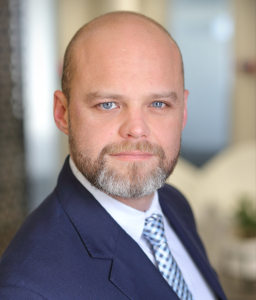
Tanya Grota
Chief Financial & People Officer