Why energy security is the conversation mining can no longer avoid
6 min read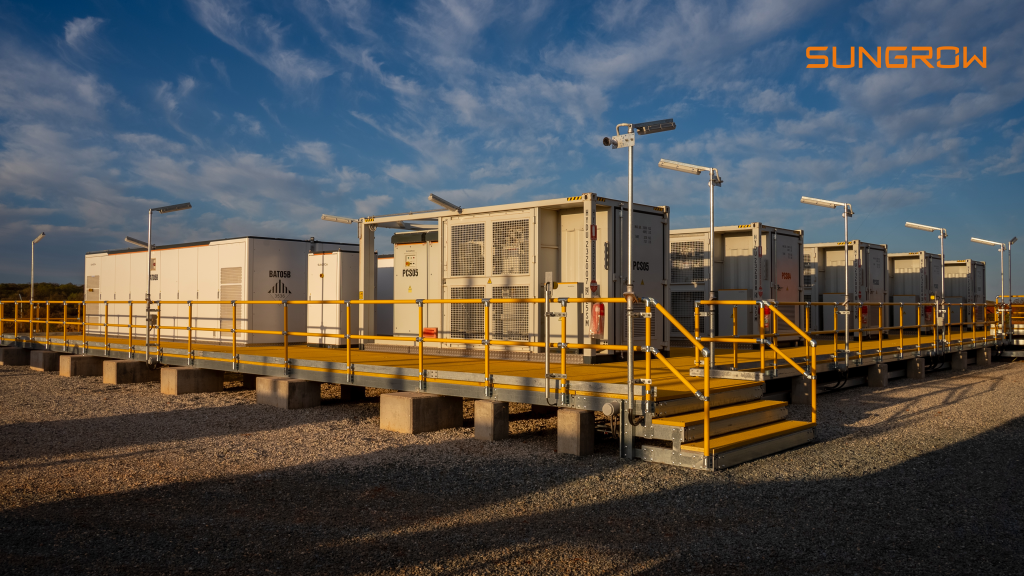
For Africa’s mining sector, energy security is no longer a background concern. It is a frontline investment consideration.
Rising costs, infrastructure constraints and growing pressure from global capital markets have forced mining companies to confront a basic question: without reliable, affordable energy, how does any of this work? That question is now shaping how projects are financed, built and operated.
Microgrids are the answer mining companies, investors and independent power producers are turning to. The reasons go further than keeping the lights on.
What a microgrid actually does
A microgrid is a localised energy system capable of operating independently or alongside the main grid. For mining operations, many of which sit in remote areas where grid access is limited or supply is inconsistent, that independence is an operational necessity.
Production stoppages caused by supply interruptions carry real financial consequences. A well-designed microgrid reduces that exposure considerably, giving operations direct control over their energy supply and ensuring continuity when the grid cannot deliver.
The most effective configurations integrate solar photovoltaic generation, battery storage and, where necessary, diesel backup into a single managed system. Sungrow‘s mining microgrid solution is built on a tightly integrated system architecture spanning photovoltaics, wind, storage, electric vehicle charging and energy management – enabling co-ordinated control across all assets.
This hybrid approach does not require mining companies to abandon existing infrastructure. It builds on it, filling the gaps that conventional supply cannot reliably cover. Intelligent controls allow mines to actively manage consumption and avoid costly peak-demand charges. The system evaluates thousands of operating scenarios in real time, optimising dispatch decisions continuously, with performance and carbon data that supports ESG (environmental, social & governance) reporting.When the main grid goes down, processing plants, ventilation systems and safety infrastructure keep running.
None of this happens without the engineers, procurement specialists and construction partners (EPCs) who design and build these systems to specification. The quality of a microgrid is determined long before it is switched on. EPCs who bring rigour to the design and commissioning process are not a supporting role in this story – they are central to whether the system performs.
The investment case
For investors and lenders evaluating mining projects, energy resilience is no longer a technical footnote. It is a financial variable. Projects that depend entirely on national utilities carry exposure that sophisticated investors price into their risk assessments. Projects with contracted, on-site energy supply do not carry that exposure to the same degree. A mine with a microgrid is a more fundable mine.
The cost argument has shifted, too. Solar PV systems and battery storage have dropped sharply in price over the past decade. Compared with diesel generation, Sungrow’s integrated microgrid solution reduces energy costs by 20% to 50%.
For many mining operations, a well-configured microgrid now delivers power at rates comparable to, or lower than, conventional grid supply, without the escalation risk that comes with utility pricing. That shifts the calculation from capital expenditure to cost management.
Microgrids, particularly those incorporating renewable generation, offer something grid supply alone cannot: long-term price predictability. Over a project’s lifetime, that predictability translates into measurable savings and more defensible financial models. For lenders stress-testing revenue projections over decades, and for equity investors who need confidence in operational continuity, a microgrid is a risk management tool that makes the project easier to back.
In practice
A gold mining operation in North Africa illustrates what this looks like at scale. The site runs a 36MW off-grid solar plant paired with a 7.5MW battery energy storage system, with Sungrow supplying equipment to the EPC contractor. The system cuts diesel consumption by approximately 20 to 22 million litres per year and is expected to avoid between 53 000 and 60 000 tonnes of CO2 annually.
It is one of the largest solar-plus-storage installations at a mine site in the region. The financial and environmental case is no longer theoretical.
Where IPPs come in
For investors who do not want exposure to mining operations directly, the independent power producer (IPP) model offers a clear entry point. Under a power purchase agreement (PPA), the IPP funds, owns and operates the microgrid on behalf of the mine. The mine pays for electricity as an operating expense, without carrying the capital cost of the infrastructure itself.
PPA payments typically rank ahead of debt-servicing costs in the creditor structure, which reduces overall financing risk. Longer dated financing instruments available to IPPs bring down the cost of capital and result in more competitive energy tariffs for the mine.
The mine focuses on extracting and processing. The IPP focuses on generating power. The EPC builds and commissions the system that makes it all work. Each party does what it knows best. The project is stronger for it. This model is already working in more mature energy markets. Africa’s mining sector is moving in the same direction.
Renewable energy technology suppliers like Sungrow are actively supporting privately financed solar and hybrid storage projects across key regions – from rooftop installations to multi-megawatt grid-connected hybrid configurations – strengthening on-site energy resilience while easing pressure on national grids.
The mines that will define Africa’s next decade are not waiting for the grid to improve. The IPPs, investors and engineering partners who move now are the ones who will shape that decade.
Nigel Sun
President
Image: Kathleen Valley Operation, Australia’s largest off-grid hybrid renewable energy system, developed in collaboration with Zenith Energy and Liontown Resources