How Rural Early Learning Can Lead the Way
6 min read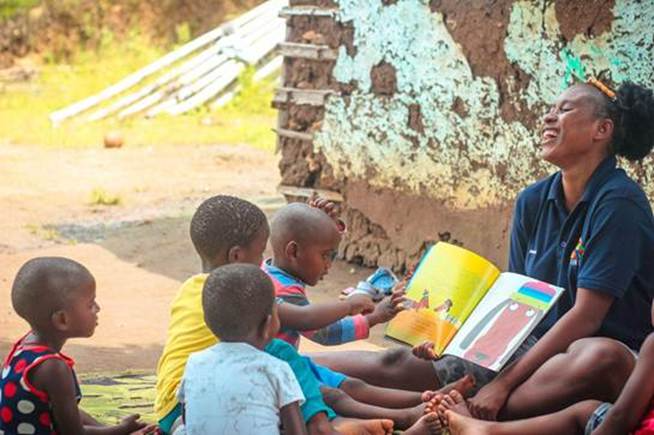
Thanda’s Take On The ‘Thrive by Five’ Index 2024, by Angela Larkan, Co-Founder and Executive Director of Thanda
Mtwalume, KwaZulu-Natal, 16 September 2025 – Earlier this week, South Africa’s Minister of Basic Education, Siviwe Gwarube, unveiled the 2024 Thrive by Five Index. The findings are unsettling, but they also provide a clear call to action.
According to the Index, only 18% of children not enrolled in an early learning programme (ELP) are developmentally “on track” for their age. While concerning, this is not surprising for those of us working in early childhood development. It underscores the widening gaps for young children and the urgent need to expand access to ELPs. The Index also highlights stark disparities in stunting: 18% of non-enrolled children are stunted, compared with 7% of children attending an ELP.
But what is most alarming is that only 42% of children attending an ELP are “on track,” a decline from 46% in 2021. These figures highlight two urgent lessons: that the quality of early learning programmes must improve, and we should look to models that are already succeeding.
Keeping the national score of 42% in mind, it is worth highlighting that in the same assessment, 95% of Thanda’s Grade 00 learners were rated “on track” across key developmental domains. Our learners are far above the national average and further still of the provincial average, which is a worrying 31%. Even more remarkable is where these results were achieved. Our classrooms are scattered across several tribal authorities in Mtwalume, some of the most rural parts of KwaZulu-Natal. Many of our learning spaces are nothing more than community-donated huts. All local schools are classified as quintile one, among the poorest in the country, and local employment is just 10%.
The Thrive by Five Index shows a clear pattern: children in higher-fee programmes are twice as likely to be on track as those in lower-fee settings, yet our programmes cut through this inequality. Thoughtful, intentional early learning works. Even in humble, under-resourced environments, children can thrive.
What makes these outcomes possible? There is no single answer, but several features of Thanda’s programme stand out.
First, we believe in the magic of storybooks. Our curriculum is built entirely around them. Children become immersed in the world of the characters, linking story to art, play, and cognitive activities. This sparks curiosity, imagination, and a love of reading. It also builds social-emotional skills through discussion, reflection, and empathy for the characters. Thrive by Five research supports this approach: emotional readiness and task orientation are among the strongest predictors of early learning success.
Second, we provide detailed, shareable teaching plans. Every activity is linked to a specific skill, allowing teachers, even those who have not attended a formal ELP themselves, to deliver learning with confidence, warmth, and consistency. In this way, we are not only nurturing children, but we are also nurturing teachers. At this point, we not only need to grow a generation of young learners; we also need to grow a generation of quality teachers. This approach makes it possible to do that right now. We know that having children enrolled in an ELP is the critical first step, but enrolment alone isn’t enough. We must seize the opportunity to rapidly build up essential skills across all developmental areas.
Third, we use data to guide continuous improvement. When our 2024 ELOM results revealed lower gross motor scores, we enhanced the curriculum with more detailed movement activities. We added a five-minute daily ‘Fit to Learn’ session and worked with an occupational therapist to design targeted exercises that strengthen reflex integration.
Finally, we work with the whole ecosystem around the child. The Index found that 96% of guardians did not know their child was not on track. Learning cannot happen in isolation. Household visits support caregiver well-being and home learning environments. Guardian meetings and neighbourhood learning circles build community understanding and involvement. Nutrition is critical. Fortified porridge, meals, and household gardens help prevent stunting and support brain development. We believe interventions like these must start from birth.
This week, as South Africa observes Book Week and International Literacy Day, the contrast between crisis and possibility is sharply drawn. Literacy does not begin at primary school. It begins with stories, curiosity, and relationships long before. Even in rural, low-income settings, literacy and learning can take root early.
The 2024 Thrive by Five findings are a necessary confrontation with reality. But if success is possible in remote neighbourhoods in KwaZulu-Natal, it can be achieved across South Africa. Urgency, investment, and the belief that every child deserves to start school confident and ready to learn are critical. Quality early learning is possible for all children and that change can begin today.