Behind-the-scenes technologies: Enabling the future of mobility
6 min read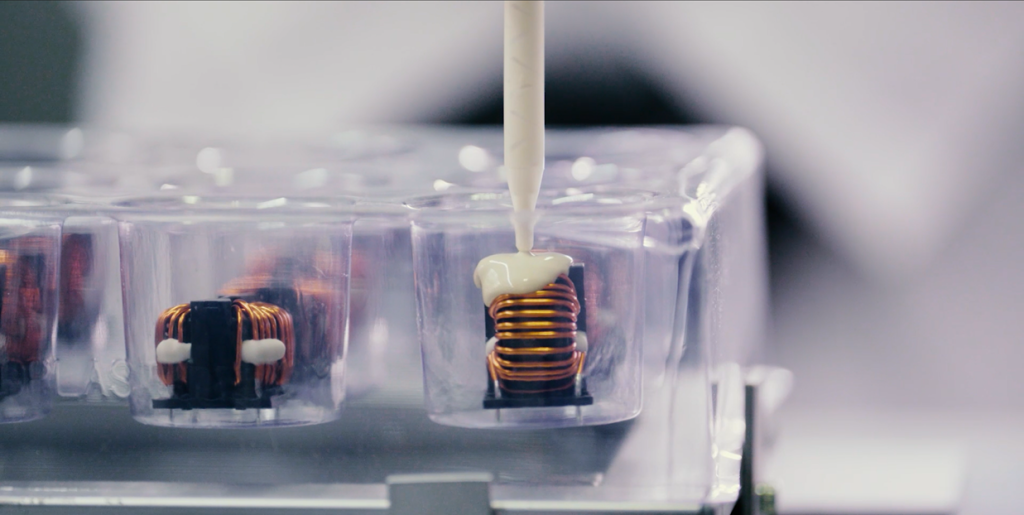
As the global automotive industry transitions at pace and scale to more electric vehicles (EVs) in both passenger and commercial categories, battery and related innovation is driving sector evolution. Pressure is mounting on manufacturers to incorporate faster charging, higher energy density batteries with improved lifetimes.
Achieving this transformation requires collaboration across the entire mobility ecosystem to advance battery technology, battery systems, vehicle electronics and charging infrastructure.
Through advanced adhesive, sealing and thermal management technologies, Henkel is helping accelerate the future of electric mobility by enabling rapid co-innovation across the EV value chain.
Working closely with automotive manufacturers and suppliers, the company is supporting the development of next-generation EVs while helping address some of the industry’s most complex engineering challenges.
“The shift from combustion engines to electric powertrains brings a different set of engineering challenges,” says Natasha Naidoo, director of Henkel Adhesives South Africa. “Key EV components, such as the battery, power conversion and e-drive systems, must meet demanding requirements for safety, thermal management, performance, cost efficiency and circularity. Through close collaboration with OEMs [original equipment manufacturers], tier suppliers and battery manufacturers, Henkel helps address these challenges globally with a broad portfolio of advanced material solutions.”
To satisfy consumer demand for increased vehicle range, faster charging speeds and more battery capacity, ‘behind the scenes’ technology is making these capabilities possible. Advanced adhesives, thermal interface materials, sealants and protective solutions play a critical role in helping batteries operate safely, protecting sensitive electronics and ensuring charging systems perform reliably under demanding conditions.
Thermal management at the heart of EV innovation
As battery performance requirements increase, so too does the importance of effective thermal management. Heat is one of the most significant challenges facing modern EV battery systems, as poor heat dissipation can affect battery performance, charging efficiency, longevity and safety.
To tackle these challenges, Henkel has developed advanced thermal management solutions including thermal gap fillers and thermally conductive adhesives that efficiently transfer heat away from critical components.
These technologies help support faster charging, improve battery performance, enhance thermal stability and extend battery life, while enabling manufacturers to design increasingly compact and efficient battery systems.
“As battery technology continues to evolve, effective thermal management is becoming a key enabler of performance, safety and reliability. The ability to manage heat efficiently is essential not only for battery protection but also for enabling the faster charging and higher energy densities that consumers increasingly expect,” says Naidoo.
Supporting the next generation of integrated vehicle architecture
The EV industry is increasingly moving toward highly integrated vehicle platforms, with multiple functions such as propulsion, charging and power conversion being combined into compact ‘x-in-1’ systems. These integrated architectures place greater demands on thermal performance, electrical insulation and component protection.
Henkel’s advanced materials support critical components such as batteries, inverters, onboard chargers, DC-DC converters, electric motors and drive units, helping ensure reliable operation in increasingly compact and high-performance designs.
The success of electric mobility depends not only on the vehicles themselves but also on the reliability, scalability and performance of charging infrastructure.
“Drawing on its expertise in materials science and application engineering, Henkel works alongside OEMs and battery manufacturers from the earliest design stages through validation and testing. Through our global Battery Engineering Centres, combined with advanced modelling, simulation, and virtual adhesive technologies, we help accelerate development, optimise system performance and reduce time-to-market,” shares Naidoo.
“Henkel supports the performance, safety and durability of EVs through a comprehensive portfolio of advanced material solutions including adhesives, sealants, specialty tapes, thermal interface materials and functional coatings. Our technologies also enable circularity through innovations such as debonding-on-demand, helping make battery repair, disassembly and recycling more efficient.”
South Africa’s opportunity in the EV transition
South Africa’s well-established automotive manufacturing sector, combined with a growing interest in sustainable, energy-efficient and cost-resilient transport solutions, positions the country to be part of the global shift toward electrification. Rising fuel costs are also driving both businesses and consumers to explore more efficient transport options and protect themselves against ongoing energy price volatility.
“As South Africa’s mobility landscape continues to evolve, there is great potential for growth in this space and opportunities to support the transition,” says Naidoo. “However, the future of electric mobility will depend on more than the vehicles themselves. For wider EV adoption in South Africa, onboard electric and electronic systems as well as public charging infrastructure that is exposed to the local climate need to be safe and reliable.”
As electrification continues to transform the automotive sector, the hidden technologies behind batteries, charging systems and vehicle electronics will become increasingly important.
Across all areas, Henkel is supporting the industry shift toward integrated and high-performance EV architectures, where thermal, mechanical and electrical reliability are critical. Through advanced material innovation and close collaboration with industry partners, the company is helping build the foundation for the next generation of electric mobility.