EDF power solutions commissions the 420MW Koruson 1 wind power cluster
5 min read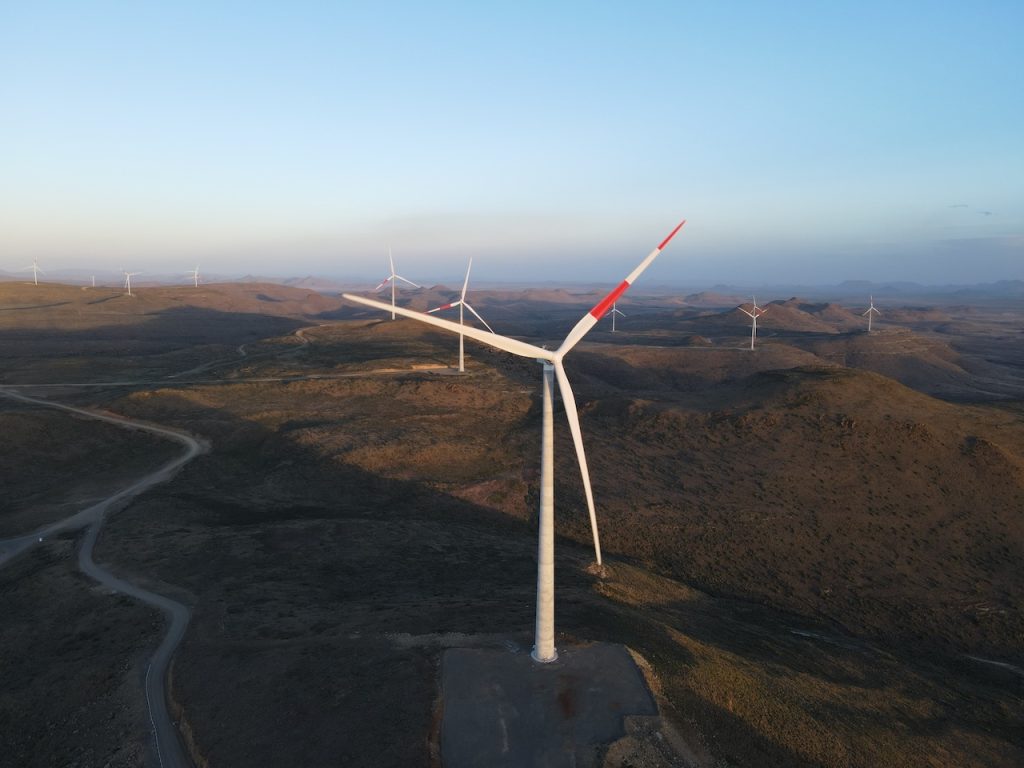
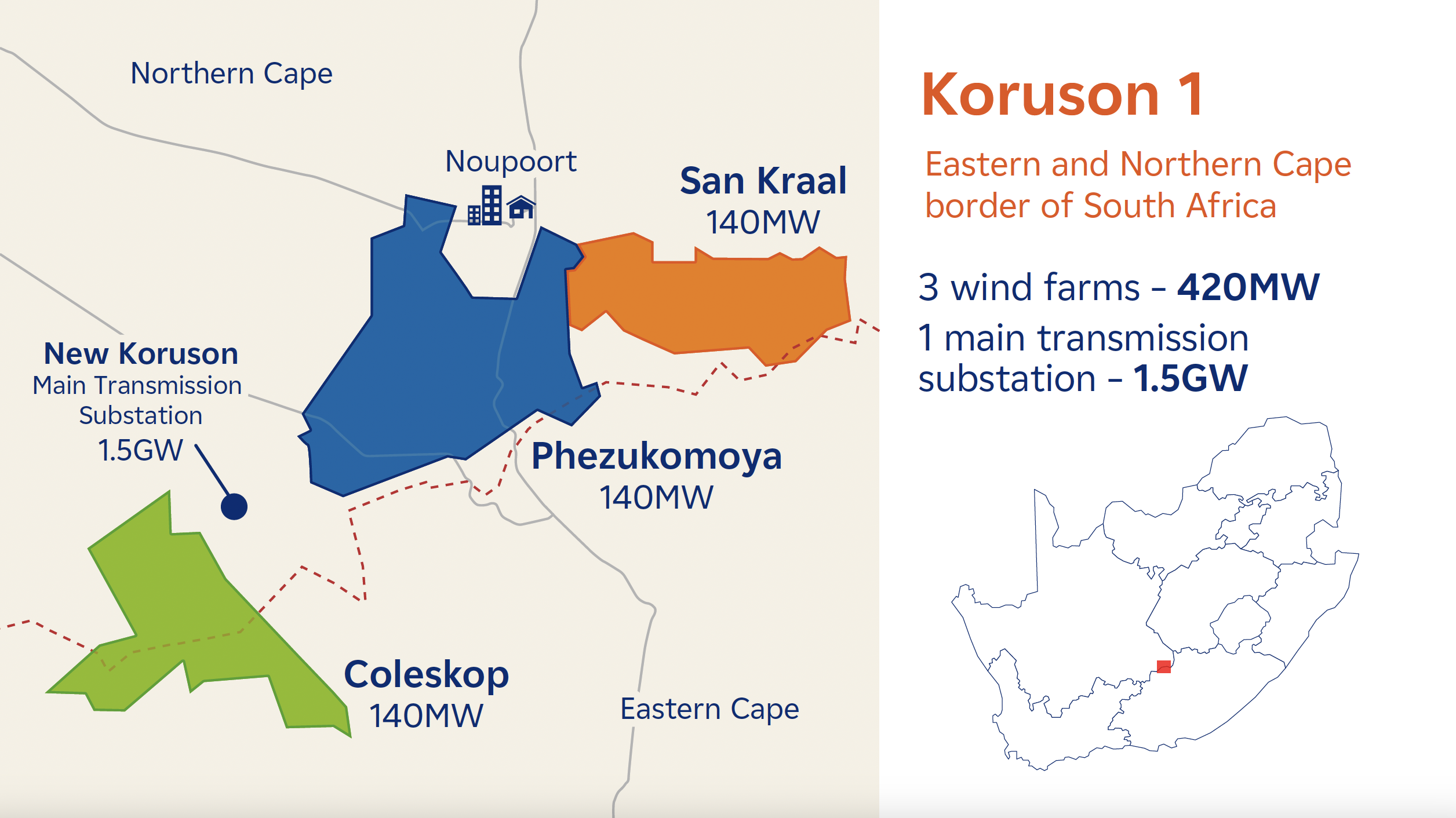
EDF power solutions has announced the commissioning of the 420MW Koruson 1 cluster, including three wind farms: San Kraal, Phezukomoya and Coleskop, located between Noupoort and Middelburg, on the border of the Eastern and Northern Cape in South Africa.
Developed by a consortium led by EDF power solutions, together with South African BEE partners H1 Holdings, Gibb-Crede and a local community trust, the Koruson 1 project was awarded under Round 5 of South Africa’s Renewable Energy Independent Power Producer Procurement Programme in 2021. The consortium has entered into a 20-year power purchase agreement with the public grid operator.
The consortium also built the largest privately constructed main transmission substation (MTS) in South Africa, designed to connect up to 1.5GW of renewable energy to the national grid, including Koruson 1 and Koruson 2 (a separate 520MW wind farm currently being developed by EDF power solutions with its energy trader partner, Envusa Energy) and other future projects.
The construction phase of the project proved challenging as Koruson 1 is situated in an isolated area, at a high altitude (over 1 600 metres) and covering more than 500km². Over 110km of access roads had to be built on hilly and rocky terrain for the construction, operations and maintenance of the project, and the components for the 78 turbines and the MTS had to be transported over 400km from the Coega harbour to the site.
The 78 wind turbines installed on the three sites have a nominal capacity of 5.6MW each. EDF power solutions chose to use an innovative turbine system that combines permanent magnet direct drive technology with a full power conversion synchronous generator. This provides a rare combination of high efficiency, reliability, unmatched grid support capability and excellent performance in South Africa’s challenging grid environment.
The concrete towers installed for the turbines offered the best project economics and met economic development and local content criteria as required by the government. They were manufactured at a local factory near Middelburg, which employed 400 workers during the construction period. The 124m high concrete towers each constitute 50 keystones, which required the manufacture of a total of 3 900 components.
Approximately 40% of the project value comprises local content. The labour-intensive project required more than 4 600 workers to be onsite simultaneously at the peak of construction. During operations, 1.2% of revenue generated by the projects will be applied to socio-economic development initiatives for nearby communities.
Tristan de Drouas, EDF power solutions Southern Africa vice-president, comments: “We are thrilled to achieve full commercial operation on Koruson 1; the project contributes significantly to meeting South Africa’s electricity requirements, supplying the equivalent electricity needs of 579 000 South African households per annum, and abating 1.8 Mtonne of CO2 equivalent per annum.
“Koruson 1 is the first project in our portfolio of 1.5GW of projects under construction to reach completion. We are especially proud of the fact that this project has been achieved with an excellent safety record.”
Adds Reyburn Hendricks, CEO of H1 Holdings, “The Koruson 1 consortium demonstrates the power of partnership in driving South Africa’s energy transition. This project not only delivers clean, reliable power to the grid, but also creates meaningful opportunities for local communities and businesses. We are committed to ensuring the benefits of renewable energy development are shared widely, supporting economic growth and empowerment in the regions where we operate.”
Says Richard Vries, chairperson of Gibb-Crede, “The successful completion of Koruson 1 is a testament to the dedication and expertise of all the partners involved. Beyond the contribution of the Koruson 1 cluster of projects to South Africa’s economic recovery plan and climate change goals, we are particularly proud of the project’s contribution to local content and job creation. The project had a significant impact on the surrounding communities during the construction stage.
“Our involvement will continue beyond construction, as we are also implementing high-impact, long-term socio-economic development initiatives to support the environment and our surrounding communities.”