KFC Add Hope’s open-source blueprint is delivering real-world impact
4 min read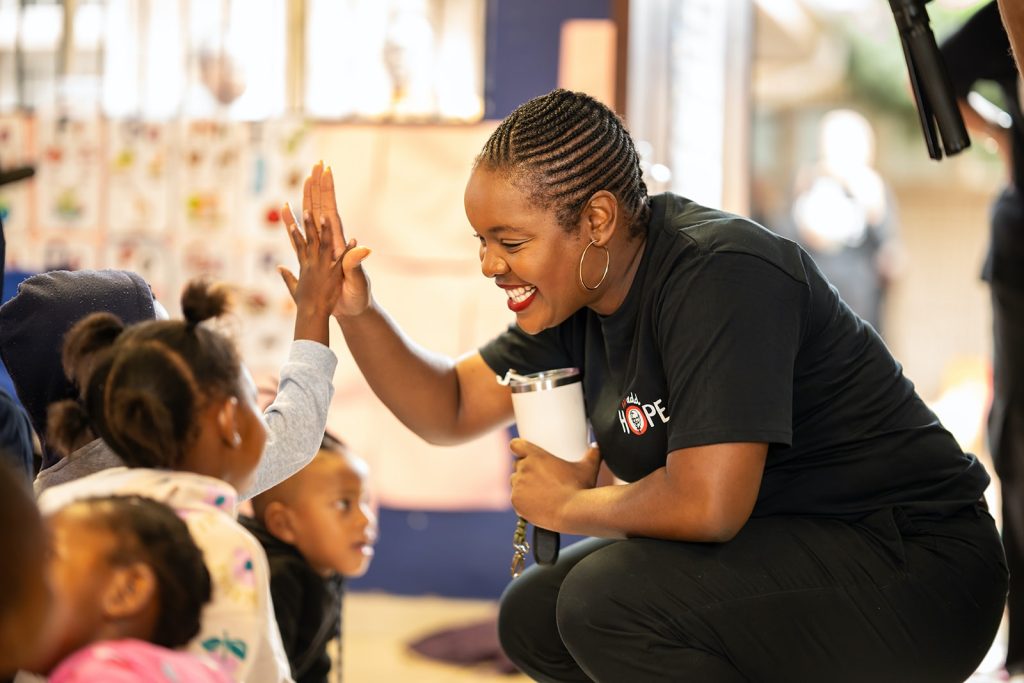
As World Hunger Month focuses global attention on food insecurity, KFC Add Hope is proving that collaborative solutions can unlock greater impact than any single organisation working alone.
On World Food Day in October 2025, KFC Add Hope did something unprecedented: It open-sourced its entire child-feeding blueprint and invited Gen Z innovators to improve it.
The Biggest Hunger Hack brought together 60 young innovators who proposed improvements to the blueprint using ideas linked to food redistribution, transparency, digital donations and data management.
Six months later, those ideas have moved from concept to implementation.
The winning solution, a prototype app that rescues surplus produce from farms and redirects it to food-insecure families, is being implemented with FoodForward SA. The partnership has unlocked 5 tonnes of surplus food daily and significantly reduced produce costs for Add Hope’s beneficiary organisations.
Ten new corporate partners have teamed up with Add Hope, and the programme has been integrated into digital delivery platforms. Ongoing engagement with the Department of Social Development is exploring a national hunger heat map to better target interventions.
“Child hunger cannot be solved by one brand alone,” says KFC Africa’s head of Corporate Affairs, Andra Nel. “By opening up the Add Hope system, we’ve shown that transparency and collaboration can unlock innovation, efficiency and scale.”
The hunger challenge
The context is urgent. Recent research reveals South Africa’s hunger crisis is deepening:
- Food-insecure people rose from 14.25 million in 2019 to 17.8 million in 2023, according to FoodForward SA’s “The State of Household Food Insecurity in South Africa” 2026 Report.
- Statistics South Africa reported that the proportion of households experiencing severe food insecurity increased from 6.4% to 8% between 2019 and 2023. Those experiencing moderate food insecurity rose from 15.5% to 19.7%.
- Child stunting, a consequence of chronic undernutrition, has risen to 28.8%, according to the 2024 National Food and Nutrition Survey.
- The 2025 Global Hunger Index ranks South Africa 74th out of 123 countries. It says 3.3% of children under 5 are wasted, reflecting acute undernutrition.
“These aren’t just statistics,” says Nel. “They’re communities trapped in cycles of poverty. Families making impossible choices about how to spend the little they have. Children who can’t concentrate in school.”
A proven system, now open for collaboration
Add Hope has operated for 17 years, building one of South Africa’s most effective child-feeding systems through customers’ R2 donations, KFC contributions, non-governmental organisation partners and over 3 000 feeding centres nationwide.
But the challenge is too large for any single organisation. By releasing the Add Hope blueprint, KFC shifted the conversation from charity to shared infrastructure: a transparent platform that partners, innovators and stakeholders can help improve and scale.
This approach directly supports South Africa’s national priority to end child stunting by 2030, a commitment highlighted by President Cyril Ramaphosa in his 2026 State of the Nation Address. As child stunting rises and food insecurity deepens, Add Hope’s open, collaborative model shows how brands, partners and communities can help turn that national goal into practical, scalable action.
“The Biggest Hunger Hack proved that when you trust young people with real problems and give them real systems to work with, they deliver real solutions,” says Nel.
“The impact our new partnerships have had in just seven months is beyond our wildest dreams, and this is just the start. We are showing in real time how much more can be achieved when motivated individuals and organisations doing great work combine their efforts.”