Interest rate hike has a hidden upside for South African savers
5 min read
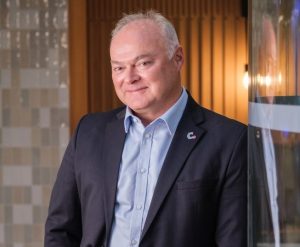
The latest interest rate hike demonstrates the South African Reserve Bank’s (SARB) commitment to defending the inflation target – and there’s also a silver lining for savers, says Jurgen Eckmann, wealth manager at Consult by Momentum.
The SARB has increased the repo rate by 25 basis points, taking it to 7.00%, with banks expected to raise prime lending rates to 10.50%. The decision also comes amid renewed global inflation concerns, rising oil prices and growing caution among central banks internationally.
According to Eckmann, “[The] hike reflects a Reserve Bank that is serious about defending its new 3% inflation target. April’s CPI print of 4% – the highest in 19 months – pushed inflation to the upper edge of the bank’s tolerance band, driven largely by fuel-price pressures linked to global supply disruption.
“The Monetary Policy Committee’s role is not necessarily to react to the shock itself, but to prevent second-round effects from becoming embedded into wages, rents and wider pricing behaviour.”
He says the announcement marks the first major stress test of the SARB’s revised inflation-targeting approach. “By moving early and decisively, Governor Lesetja Kganyago is signalling that 3% is intended to be a hard line, not a soft suggestion. There may be short-term pain, but the alternative is allowing inflation expectations to drift and ultimately paying for it through far steeper hikes later on.”
While the increase may appear relatively modest in isolation, Eckmann notes that its impact compounds over time for heavily indebted households. “For every R300 000 of a vehicle loan at prime, a 25 basis point hike adds roughly R37 a month to repayments.”
However, he says the most severe financial strain is often not found in vehicle or mortgage debt, but in unsecured lending. “If you are carrying credit card debt at the typical 18% interest rate, the hike itself only adds around R6 a month per R30 000 of balance.
“But that is not really the story; the real issue is that consumers are already paying approximately R5 400 a year in interest on that R30 000 simply to stand still. Compare that to a home loan, where the same R30 000 of debt costs around R3 150 a year. Credit card debt is roughly 74% more expensive than your bond – every single month you carry it.”
The savings silver lining
Eckmann says there is another side to the interest rate story that is often overlooked. “A rate hike is a tax on debt, but it is also a dividend on discipline. South African savers – particularly retirees and consumers holding emergency funds in money market or income products – are now earning some of the strongest real cash returns in the emerging market environment.”
The current environment may inadvertently present an opportunity for consumers to revisit their savings and investments. “For consumers with excess cash or short-term savings goals, this is one of the more attractive interest rate environments we’ve seen in years. The key is making sure your money is working as hard for you as possible.”
Stop two-pot, stop!
At the same time, he warns consumers against turning to South Africa’s two-pot retirement system as a knee-jerk response to rising costs or debt pressure. “Many households may feel tempted to dip into their savings pot to bridge the gap. But that can be an extremely expensive long-term decision. A R30 000 withdrawal at age 40 could ultimately destroy hundreds of thousands of rand in future retirement value once tax and lost compounding are taken into account.
“Long-term savings, such as your retirement, should be the last place consumers turn to for short-term relief.”
Financial advice for uncertain times
“My advice to consumers? View higher interest rates as a stress test, not an emergency, and use it as an incentive to tackle that stubborn debt. Credit cards and store cards before the bond, before the car, before anything else.
“And whatever you do, don’t fall into the minimum-payment trap: At 18% interest, paying only the 5% minimum on a R30 000 card balance keeps you in debt for around a decade and can cost approximately R12 600 in interest. Double that monthly payment to 10% and you’re out in under five years, having paid R5 250.”
Eckmann says periods of financial pressure reinforce the importance of sound financial planning and objective advice. “Economic cycles are unavoidable, but reactive financial decisions can have lasting consequences. Consulting with the right adviser can help consumers continue to build and protect their financial dreams, even during times of uncertainty.”
Image credit: Magnific/DilokaStudio