Championing heritage by reading to children in their home languages
4 min read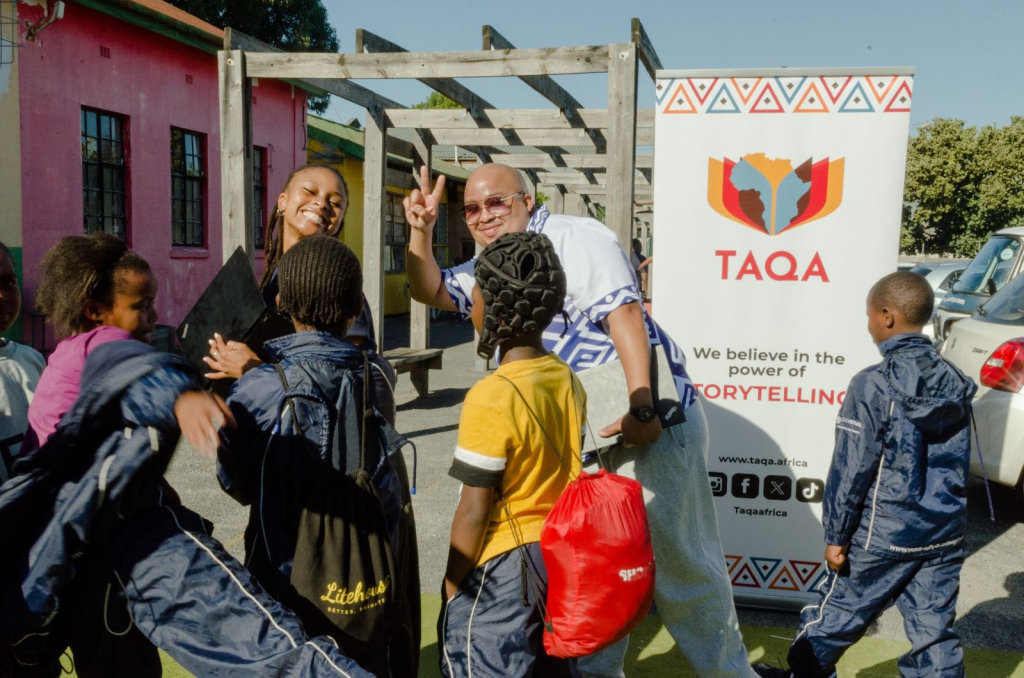
National Book Week is an initiative led by the South African Book Development Council (SABDC) in partnership with the Department of Sport, Arts and Culture from 5 to 11 September this year, coinciding with International Literacy Day on 8 September. The events highlight the important role books play in our lives: through sparking imagination during childhood, nurturing curiosity in adolescence, or providing wisdom and reflection in adulthood.
South Africa faces challenges in building a reading culture as only 14% of citizens are active readers and only 5% of parents routinely read to their children – highlighting a deepening literacy crisis, particularly among children.
Currently, while the right to education in one’s home language is constitutionally enshrined, children do not truly have this opportunity beyond grade 3. Furthermore, while a number of primary schools study in African Home languages up to grade 3, this often occurs in resource scarce environments which do not support this learning. From grade 4, practically all learners have to learn in either English or Afrikaans. This is despite less than 9% of households in South Africa communicating in English. As well as research suggesting that children learn best in their home language. The Department of Basic Education’s new national rollout for the Mother Tongue Based Bilingual Education policy which teaches children in both English and their home languages up to grade 7 is thus a welcome intervention.
This reality underscores the importance of teaching children reading and writing in their mother tongues. Particularly in the context of a post colonial and post Apartheid South Africa, in which the black majority was systematically oppressed, it is important to fight against the persisting systemic elements that continue to disadvantage black South African children. Further, In a multilingual society like South Africa, this approach not only aids individual learning but also strengthens social cohesion by enforcing the value of every culture and language.
An organisation working to advance this mission is TAQA, a South African start-up that was founded by four UCT alumni in 2018. The name TAQA is an acronym of the four founding members namely: Tsepang Khoboko, Akholiwe Fetsha, Qhawe Bula and Aphendulwa Ngqola.
TAQA was founded with two primary missions; to break barriers to access to children’s literature using tech and language, and to celebrate and preserve African languages and cultures. The pioneering storytelling start-up has built a digital library of children’s books which houses their original children’s ‘videobooks’ – in a vibrant blend of text, audio and illustrations – available in all 11 official spoken languages. The organisation also produces story content in a podcast & live-reading format that can be accessed on their YouTube.
“We are building a future where every child can read, and where every child has a library of culturally relevant stories to enjoy in their hands. By using technology to distribute multilingual stories in engaging formats, we ensure children can experience books even where access to physical libraries and bookstores is limited” says Qhawe Bula, one of the four founding members.
At the heart of our work is the belief that languages are not just tools of communication but vessels of culture, history and imagination. “Our work preserves the rich heritage of South Africa’s diverse languages . Through our digital library, we are fostering a love for reading among children and ensuring they can see their identities in the stories they read” concludes Qhawe Bula.
To access TAQA’s eLibrary click here