Rural ECD learners show strong school readiness amid national decline
5 min read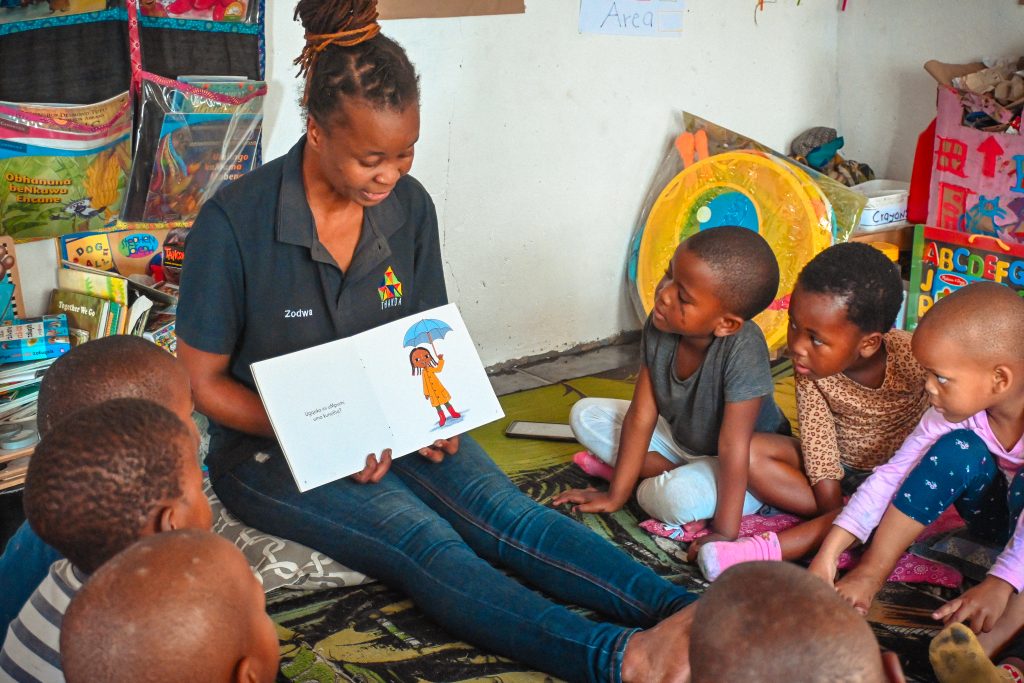
Term 4 marks the period when many early childhood development (ECD) centres across South Africa assess children’s readiness to enter Grade R or Grade 1. This period often prompts reflection across the education sector about how effectively early learning programmes prepare children for ‘big school’ and formal schooling.
At the start of 2025, the Department of Basic Education (DBE) faced persistent system pressures including unplaced learners, teacher shortages and overcrowded classrooms. These challenges continue to affect teaching quality and learner outcomes across the country, particularly in lower income communities.
As South Africa looks ahead to 2026, improving early learning outcomes is increasingly seen as central to easing pressure on the broader school system. Children who begin school ready to learn require less remedial support and are more likely to progress successfully through later grades.
National Early Learning Outcomes Measure (ELOM) assessments highlight the scale of the problem. The recently released Thrive by Five Index 2024 shows a further decline, with only 42% of enrolled children meeting age-appropriate developmental milestones. These findings underscore how inequities in access to quality early learning continue to influence long-term educational outcomes.
The earlier 2021 ELOM results found that only 46% of children nationally, and 31% in KwaZulu-Natal, were developmentally ‘on track’ at school entry – indicating a continued downward trend in early learning outcomes in recent years.
Alarmingly, only 18% of children not attending an ECD centre are on track, illustrating how critical access to early learning opportunities is for children’s development.
Thanda, a non-profit organisation based in rural KZN, continues to demonstrate that quality early learning is possible even in low-resource settings. Many households in these communities survive on an average income of just R14 600 per year (Stats SA, General Household Survey), around R1 225 a month to support four to five family members.
Despite the systemic challenges reflected in national data, Thanda’s model shows that consistent mentorship and a structured curriculum can drive lasting change. In its most recent ELOM assessment, 95% of Grade 00 children in Thanda’s ECD programme were rated ‘on track’ across key developmental areas, and none were falling far behind, compared to 30% nationally in the red.
This performance is far above both the provincial and national averages, showcasing the impact of Thanda’s approach. The non-profit uses a proprietary, evidence-based, storybook-focused ECD curriculum that guides teachers minute-by-minute, explaining what to do and why each activity matters.
“This is a period of reflection for the ECD sector,” says Angela Larkan, co-founder and executive director at Thanda. “As many children across the country undergo school readiness assessments, our results show that a structured curriculum can transform classroom practice down to the minute.
“Even with classrooms in some of the most remote areas in the district, our detailed curriculum ensures consistent and quality teaching. I truly believe this is what sets us apart. It is not a success story in a vacuum; we believe it’s replicable when both children and practitioners are supported through a curriculum designed with their needs in mind.”
School readiness in South Africa is measured across several developmental domains. The DBE’s Early Learning and Development Areas guide practitioners in assessing progress in well-being, identity and belonging, communication, early mathematics, creativity and knowledge of the world. Independent tools such as the ELOM complement this framework by providing nationally comparable data. Current research and practice emphasise that readiness extends beyond literacy or numeracy to include emotional regulation, social confidence and the ability to adapt to structured environments.
“Improving the quality of early education is one of the most effective ways to strengthen the education system as a whole,” says Larkan. “These findings reinforce that meaningful progress is possible, even in under-resourced communities.”
As the education system prepares for 2026, early learning quality remains a critical lever for sustainable systemic change. Thanda’s programmes demonstrate how targeted investments in ECD can strengthen foundational learning and contribute to long-term success.