Impact in the township economy comes from long-term commitment and relationships
5 min read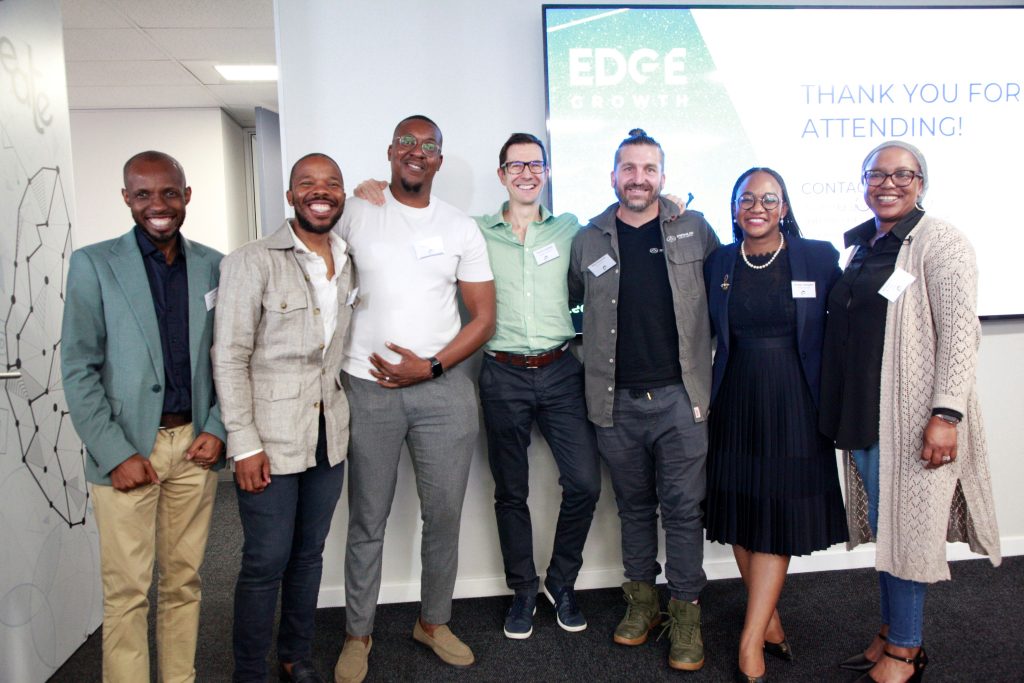
“For too long, the story of our township economy has been told in two conflicting ways: either as a problem to be solved, or a R900-billion opportunity to be exploited,” said township economy expert, Sifiso Moyo.
The township economy in South Africa is valued at R900 billion rand annually, with 21 million consumers across over 530 townships. Moyo says that through intentional design, blended capital and deep ecosystem leverage, real potential is being unlocked – which is turning data into tangible impact.
Moyo was the keynote speaker at the recent launch of small business development specialist Edge Growth’s Impact Report for 2025. This report outlines how, over the last year, a blend of rigorous data and human stories has demonstrated the measurable impact of Edge Growth’s support on entrepreneurs, families and communities.
Edge Growth has formally elevated township economies as a strategic area of measurement and investment within their ecosystem. In order to create even more impact going forward, Edge Growth is focusing on three key pillars: sustainability, youth and township economies, and specifically here, to increase its support of small to medium enterprises (SMEs) in informal and township markets.
“South Africa’s township economy is one of our greatest engines of inclusive growth, and the data now proves it. With 87% of Edge Growth’s supported SMEs being black-owned and a growing share operating in township and informal markets, we are seeing how access to catalytic capital, skills and market linkages can transform local economies from the ground up,” said Dan Hatfield, Edge Growth CEO.
In his keynote, Moyo emphasised that the real constraints facing township businesses are seldom just the lack of capital, but rather issues of systems, value chains and mentorship. For township enterprises to grow sustainably, they need access to structured support, not only funding, along with supply chain access, mentorship and training and business support, especially to be able to scale.
Moyo noted the role and potential of frameworks including the Gauteng Township Economic Development Act, the Spaza Shop Support Fund, the Township & Rural Entrepreneurship Programme run by the Small Enterprise Finance Agency, and the Township Economy Partnership Fund in partnership with the Gauteng Enterprise Propeller and Industrial Development Corporation – all aimed at enabling business growth, formalisation and investment in townships.
Programmes that go beyond financing by offering business support, mentoring and market access to help enterprises grow play a vital role in growing sustainable enterprises. The 2025 Edge Growth Impact Report highlights the Abadali Fund and the Ignite Fund, both managed by Edge Growth, which support early-stage and smaller township SMEs, providing the necessary guidance, mentorship and market linkages to help them scale and integrate into broader markets.
Examples of how some township businesses are thriving through targeted funding and support include Photsaneng Pharmacy, which is bridging a 15km healthcare gap for 20 000 people through blended finance and franchise partnerships. Dilex Purification in KwaZulu-Natal established a hazardous waste recycling facility that powers over 200 jobs and supplies electricity to more than 1 000 households. Tolokazi® Craft Beer raised over R3 million from the Mining Investment Corporation to expand its sales, marketing and distribution into the Netherlands, UK and US, while also creating township-based micro-distributors.
“Our 2025 Impact Report shows that when township-based SMEs receive the right support, they create jobs, grow revenue and build resilient community economies. This is impact by design: using data with soul to ensure every intervention strengthens the people, businesses and ecosystems that keep our townships vibrant,” said Hatfield.
The message, said Moyo, is clear: “Supporting SMEs in townships is not a one-off intervention but a long-term commitment. Through intentional design, blended capital and ecosystem orchestration, South Africa’s township economy is proving that impact is not an event – it is a relationship, and SMEs are at its heart.”