Time for SARB to act: Pressure mounts for rate cuts amid economic strain
3 min read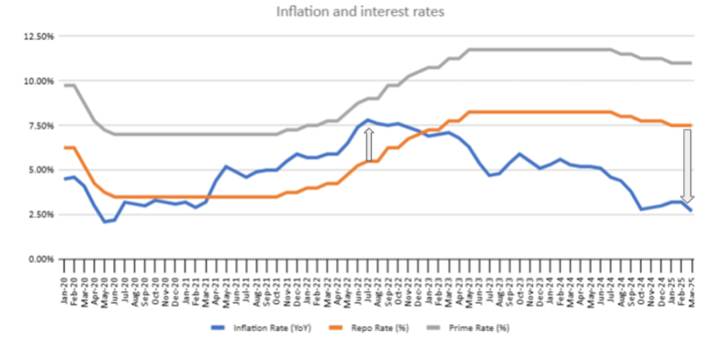
As the South African Reserve Bank’s (SARB) Monetary Policy Committee (MPC) prepares to announce its latest decision on the repo rate this Thursday, small business owners are urged to remain agile and strategically prepared for potential economic shifts.
This week’s announcement comes just ahead of the critical August 1st deadline for tariff negotiations, a factor that could further influence the operating landscape for many businesses.
Economists are keenly watching the SARB, with some predicting a potential repo rate cut – a welcome reprieve for consumers and businesses alike, driven by recent tame inflation figures. However, the prevailing economic climate, marked by ongoing challenges, necessitates continued prudence for small businesses.
“While the prospect of interest rate cuts offers a glimmer of hope, particularly given recent inflation trends, the reality for many small businesses remains tough,” says Garth Rossiter, chief risk officer at SME services provider Lula.
“Our internal data has shown a significant impact on SME turnover over the past year, underscoring this persistent financial pressure. The attached chart illustrates the recent divergence: inflation peaked in mid-2022 and decreased for more than two years before any downward interest rate adjustment.
“The data shows that the SARB has been proceeding more cautiously than some might hope, and this is potentially stifling growth. When you have consistently low inflation and high interest rates, it creates a real brake on growth which our economy can ill-afford.
“While we appreciate the delicate balancing act the SARB faces with global tariffs and uncertainty, and how these might impact future inflation, consumers and small businesses need stability and an enabling environment to thrive. Every policy decision – from interest rates to tariffs – has a direct impact on their ability to operate, grow and create jobs. It is all a trade off, but at the moment, the benefit of SARB taking a much bolder move on interest rate cuts to drive economic growth outweighs the short-term inflation risk,” he says.
The August 1st deadline for tariff negotiations adds another layer of uncertainty, as changes in both import or export duties can drive inflation by directly affecting input costs, pricing strategies and competitiveness for businesses involved in trade. The possibility of these tariffs should motivate small business owners to invest in their competitive advantage and urgently scrutinise their internal operations for efficiencies.
“If your product offers exceptional quality, niche appeal, or a distinct competitive advantage, demand can persist even with higher tariffs,” says Rossiter.