How Wits Donald Gordon Medical Centre is advancing specialised reconstructive surgery in SA
6 min read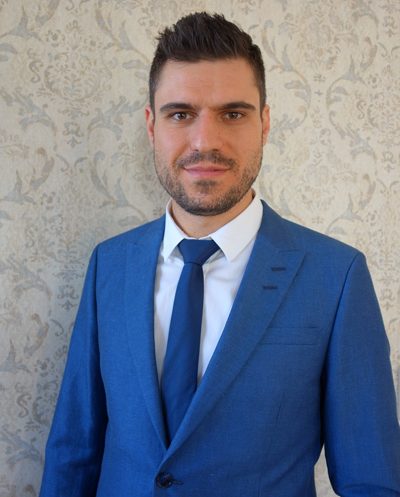
When 12-year-old Eugene underwent a highly specialised facial reanimation procedure earlier this year, the surgery represented something profoundly human: the possibility of smiling for the first time.
Born with Moebius syndrome, a rare neurological condition that affects facial movement and expression, Eugene had spent his life unable to smile, blink properly or express emotion through facial movement.
And while his story is emotionally powerful, it also shines a light on a far broader healthcare reality: the growing importance of highly specialised reconstructive surgery in restoring not only appearance but movement, function, dignity and quality of life.
At Wits Donald Gordon Medical Centre (WDGMC), reconstructive microsurgery is helping redefine what is possible for patients facing some of the most complex medical challenges, from congenital conditions and cancer to severe trauma and tissue loss.
Often misunderstood as a field focused primarily on cosmetic procedures, reconstructive microsurgery sits at the intersection of surgical precision, innovation and long-term patient rehabilitation. These procedures frequently involve transplanting tissue, muscle and nerves from one part of the body to another and reconnecting blood vessels, often measuring less than two millimetres in diameter, under microscopic magnification.
Leading this work at WDGMC is Dr Dimitri Liakos (pictured), a plastic and reconstructive surgeon with fellowship training in reconstructive microsurgery and super microsurgery.
“These procedures are not simply about appearance,” he says. “They are about restoring function, movement and ultimately helping patients regain parts of their lives that were lost or that they were born without.”
In Eugene’s case, surgeons transferred functioning muscle together with its blood and nerve supply into the face, reconnecting these delicate structures under a microscope so movement could gradually return over time.
Eugene’s procedure was facilitated through the support of the Smile Foundation, which works to improve access to reconstructive surgery for children requiring specialised care.
“We are deeply grateful to Wits Donald Gordon Medical Centre and Dr Dimitri Liakos for their dedication in supporting Eugene on his journey,” says Tarri Parfitt, CEO of Smile Foundation. “It is truly remarkable to open a world-class facility to this family and provide care at the highest level of expertise.
“Facial reanimation surgery is profoundly life-changing. For Eugene, it represents the possibility of expression, connection and a future he may never have imagined before.
“For Smile, it was also an invaluable opportunity for other surgeons to learn from such a rare and complex case, turning one surgery into the potential to help many more children like Eugene. We highly value the opportunity to work alongside Wits Donald Gordon Medical Centre on cases such as this and look forward to helping many more children together,” she adds.
While these procedures are performed in highly specialised centres globally, access to this level of care remains limited in South Africa due to the advanced infrastructure, multidisciplinary expertise and years of specialised training required to perform them successfully.
For WDGMC, however, the ability to perform these surgeries forms part of a broader commitment to advancing highly specialised care within South Africa’s healthcare system while simultaneously strengthening academic medicine and specialist training.
As an academic hospital affiliated with the University of the Witwatersrand, WDGMC has become an important training environment for complex reconstructive microsurgery in South Africa. The hospital recently established the country’s first reconstructive microsurgery fellowship programme for qualified plastic surgeons, helping expand the number of specialists capable of performing these highly technical procedures.
“We have a responsibility not only to perform these surgeries but to transfer the skill,” says Dr Liakos. “If we do not train future microsurgeons, access to this level of specialised care will remain limited.”
According to Dr Liakos, successful reconstructive microsurgery depends not only on surgical expertise but on building the right multidisciplinary environment around patients. “To do these cases successfully, you need a dedicated team and an environment that functions seamlessly,” he explains. “Microsurgery is never a one-person effort. It is the nursing staff, anaesthetists, theatre teams and systems around you that make these outcomes possible.”
For surgeons working in the field, the impact of reconstructive microsurgery extends far beyond the operating theatre. “These surgeries can take 10 or 12 hours. They are physically and emotionally demanding,” says Dr Liakos. “But when you step back and realise that what you are doing may change the course of a person’s life forever, it gives meaning to every moment spent in theatre.”
As WDGMC continues to build on its reconstructive microsurgery programme and the country’s first fellowship of its kind, the hospital is helping shape a future in which South African patients can access world-class reconstructive care close to home and in which the specialists capable of providing that care are trained locally.