Henkel South Africa advances carbon neutrality with major emissions reduction at Alrode factory
4 min read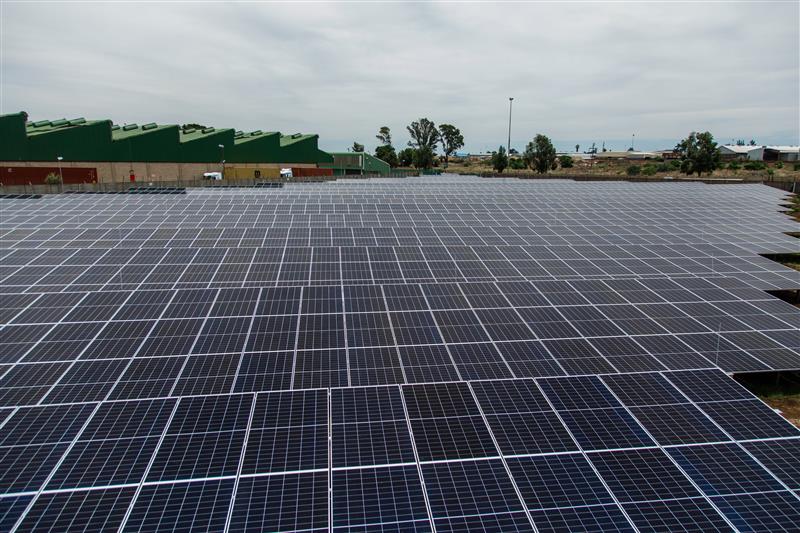
Henkel South Africa has made significant progress in advancing sustainable manufacturing, achieving a substantial reduction in carbon emissions at its Alrode production facility through a series of targeted operational measures.
Between 2024 and 2025, the facility reduced its CO₂ emissions from 613 tonnes to 375 tonnes, reflecting a 238-tonne reduction driven by improvements in energy efficiency, equipment optimisation and a shift toward renewable energy.
A key contributor to this progress has been the commissioning of a 1.8MWp solar installation, which now supplies approximately 65% of the plant’s electricity demand.
This transition, combined with the phased removal of fossil fuel-based systems and the introduction of electric alternatives, is enabling the facility to significantly reduce its operational carbon footprint.
Since June 2026, the Alrode facility operates at net-zero emissions, positioning it to achieve site-level carbon neutrality.
“Sustainability at Henkel is no longer a future ambition. It is embedded in how we operate on a daily basis,” says Thelma Mamatlepa, Henkel Alrode plant manager. “The progress at Alrode reflects a deliberate shift toward integrating sustainability into core operations, where energy, equipment and process decisions are aligned to deliver measurable impact.”
In addition to emissions reduction, the facility has improved overall energy efficiency by approximately 35%, resulting in meaningful cost savings while reinforcing operational resilience. These gains highlight the growing intersection between sustainability and business performance within the manufacturing sector.
“What is particularly important is that these improvements are not standalone sustainability initiatives, but part of a broader operational strategy,” says Veerabhadra Konakalla, head of SHE IMEA Adhesive Technologies. “Across our India, Middle East & Africa operations, we are focused on embedding sustainability into how we manage safety, energy and environmental impact at a systems level. The progress at Alrode reflects how a structured, disciplined approach can deliver measurable outcomes while supporting long-term resilience.”
Henkel South Africa’s progress aligns with broader national and global efforts to transition toward a lower carbon economy. As South Africa works to meet its commitments under its Nationally Determined Contribution and the Paris Agreement, the role of industry in delivering measurable emissions reductions is becoming increasingly critical.
At the same time, initiatives such as on-site renewable energy generation and electrification of operations reflect the principles of the Just Energy Transition, supporting decarbonisation while maintaining operational efficiency and cost competitiveness.
These efforts are further aligned with the Integrated Resource Plan, which prioritises increased renewable energy capacity and greater private sector participation in energy generation.
Globally, Henkel continues to advance its sustainability agenda, targeting a 42% reduction in Scope 1 and 2 emissions and a 30% reduction in Scope 3 emissions by 2030, with the ambition of achieving net-zero by 2045.
“The Alrode facility is a strong example of how global sustainability commitments can be translated into local execution,” adds Mehmet Yilmaz, director of Operations and Projects, MEA Henkel Adhesive Technologies. “By combining targeted investments with operational focus, we are able to scale impact across our manufacturing network, ensuring efficiency, reliability and sustainability are advanced together in a practical and commercially viable way.”