Bulk LPG infrastructure launch anchors ECCI 2030 clean cooking push in North West
5 min read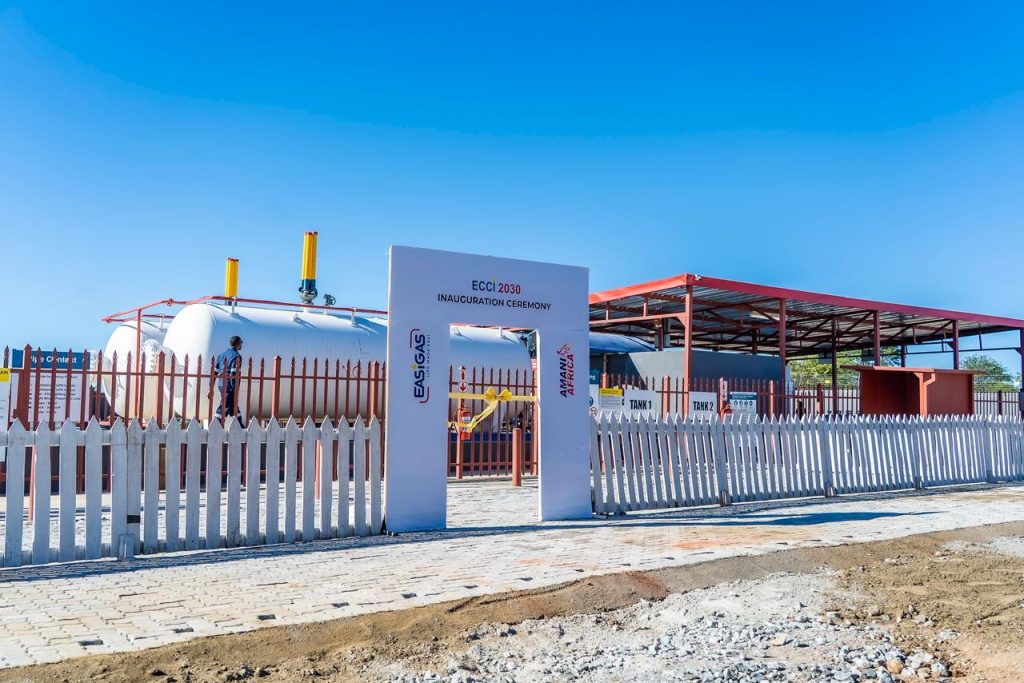
The recent commissioning of locally owned and managed Amani Africa’s bulk liquefied petroleum gas (LPG) facility has firmly anchored the launch of the Easigas Clean Cooking Initiative (ECCI 2030).
This clean cooking programme will directly counter pervasive energy poverty in some of the province’s most vulnerable communities: installing 500 community points of sale and reaching 1.25 million South African households by 2030.
This dual-site inauguration of Amani Africa’s bulk infrastructure facility in Mogwase and LPG point-of-sale clean energy hub at Moruleng Mall in the heart of Bakgatla-ba-Kgafela territory marked a deliberate departure from the conventional clean cooking playbook. “While most LPG access programmes focus on last-mile distribution alone, ECCI 2030 expands this value chain through our local ownership of critical bulk infrastructure,” explained Refilwe Sebothoma, chief executive of Amani Africa and Hakem Energies. “This makes today a milestone day for our sector, the industry and our communities.
“Our experience of the past five years has taught us that while last-mile LPG distribution is necessary, by itself it is insufficient to positively disrupt the pervasive energy poverty that is still a daily reality for those living in our most vulnerable communities,” she noted at the commissioning.
“If communities only ever receive product without owning any part of the value chain, the economic benefit leaves with the truck. What we are doing in Mogwase is different. The bulk plant itself – the upstream asset – sits in local hands. That changes who benefits and for how long, as we are now able to fundamentally challenge the traditional business model in place, and repurpose it in alignment with deep community needs and the SDGs [UN Sustainable Development Goals].”
Beyond supplying the mines and industries in the surrounding region, Amani Africa’s Mogwase facility will supply a network of small, community-based points of sale operated by local entrepreneurs, with a deliberate bias toward women and youth.
Refills will be available from as little as 1kg, and 3kg and 5kg cylinders have been introduced to lower the upfront cost of adoption: historically one of the largest barriers preventing low-income households from switching away from wood, coal and paraffin.
The first community point of sale was officially opened at Moruleng Mall during the second part of the ceremony, in partnership with the Bakgatla-ba-Kgafela Traditional Authority, whose leader Kgosi Nyalala Pilane presided over the closing remarks at the Mogwase ceremony.
“Traditional leadership has played a central role in identifying beneficiaries, enabling access to land for infrastructure and mobilising household uptake,” noted Sebothoma.
Sebothoma, who was raised in Marikana, said the model was designed to address structural exclusion in the LPG value chain. “I grew up watching and directly experiencing what energy poverty does to families. It steals time from women, takes children out of classrooms and tragically can cost lives. At the same time, the wealth created by the energy sector often flows past the very communities it draws from. ECCI 2030 is a deliberate attempt to reverse that flow – so that when a household lights a clean flame, the value created moves through local hands first.”
The initiative is structured as a public-private partnership drawing together Easigas (a Level 1 B-BBEE contributor backed by France’s Rubis Énergie and South Africa’s Reatile Gaz), alongside the Department of Electricity & Energy, the National Energy Regulator of South Africa, the Department of Small Business Development, the Small Enterprise Development and Finance Agency, and the Liquefied Petroleum Gas Association of South Africa.
Last-mile sites are part-financed through a blend of grants and interest-free loans, while households are offered subsidised LPG appliances.
Sebothoma added that ECCI 2030 is projected to create approximately 800 direct and 300 indirect jobs in rural and low-income areas, and to avoid an estimated 350 000 tonnes of CO2-equivalent emissions a year by 2030.
Easigas projects that the programme could reduce the risk of premature death by between 20% and 30% for some 4.3 million people currently exposed to indoor air pollution from solid-fuel cooking: “This is the part that really gets all of us excited. Imagine the lives we will be able to positively impact – and the direct futures changed.”
The launch positions ECCI 2030 as one of the more ambitious clean cooking programmes on the continent, and aligns with South Africa’s Just Energy Transition framework, which seeks to balance decarbonisation with equity and local economic development.
“A clean flame should be a basic right,” Sebothoma concluded. “Owning the infrastructure behind it means we can now ensure just that: bringing new hope and energy equality into communities, homes and lives that need it most.”