Most gifting moments in business are forgettable – they don’t have to be
6 min read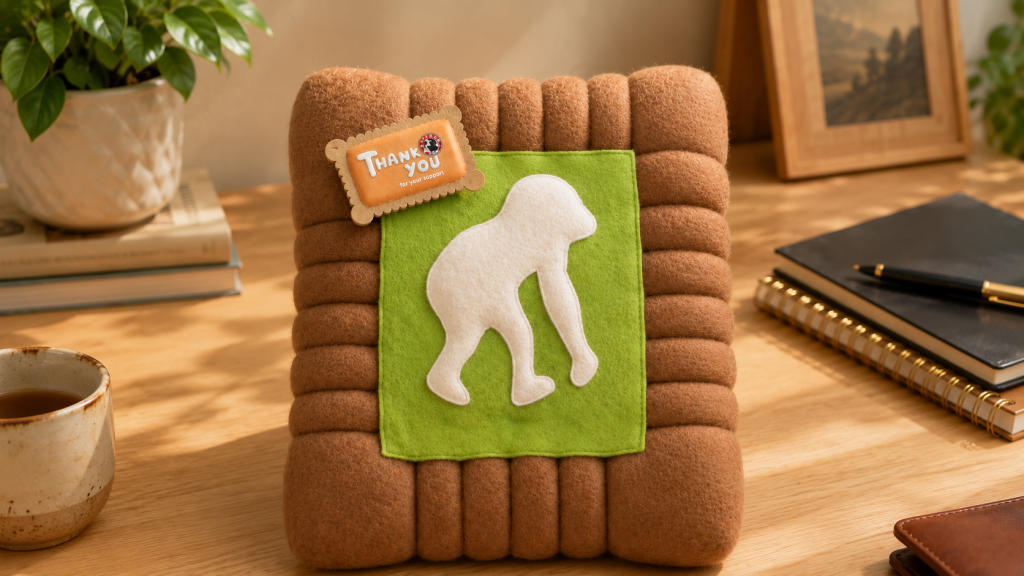
Most corporate moments today are painfully easy to forget, says Vicki Scheffel, founder and creative director of GE:SKENK. Often the thinking starts and stops at what can we get, how quickly and for what budget. Here she explains why businesses are wasting some of their biggest opportunities for connection by treating meaningful moments like procurement exercises instead of human experiences.
Studies in psychology and consumer behaviour consistently tell us that emotionally charged experiences are remembered vividly. Purely functional ones? I doubt many of us can even recall one of them, which honestly should concern more businesses than it currently does.
Why? Because companies are spending significant amounts of money on moments people barely remember five minutes later. In fact, in 2025, the global corporate gifting market was valued at over $925 billion. To put that into perspective, that is larger than the gross domestic product of many countries.
This massive valuation highlights the major shift in corporate strategy where gifting has moved from a polite ‘thank you’ or quick ‘happy birthday’ to a measurable tool for employee retention, client loyalty and brand engagement.
And yet, so many companies are still getting their gifting moments so fundamentally wrong.
I have watched this happen for years. It starts with an urgent email for a launch that needs a gift or a client needs a thank-you. Cue the quick scramble. A budget gets signed off, and procurement gets moving. Boxes arrive. People politely smile. And then the whole thing quietly disappears into the back of a cupboard, the donation pile, somebody else’s desk – or worse, the bin.
Not because people are ungrateful. Because they felt absolutely nothing.
That is the part businesses miss. They think the spend itself creates value. It doesn’t. If the recipient is not moved in some way – emotionally, nostalgically, personally – then the moment has no real life beyond the handover. It simply becomes another corporate object floating around the world with no story attached to it.
What people hold onto is something entirely different, and this gap between intention and execution is where so many business moments collapse.
One of the projects that changed my thinking around this completely was a Bakers Biscuits media drop many years ago. At the time, the expected route was the fairly predictable cycle of nice gift along with product, pretty packaging. Instead, we asked a slightly wild question: what if this could become an artefact of joy?
Because Zoo Biscuits already carried emotional memory long before we touched the campaign, we decided to leverage the brand to connect with media. They are the epitome of joy in South Africa. Most people have some kind of childhood memory attached to them, and almost everyone has their own ritual for eating them. Some leave the icing for last. Some bite around the animal shape. There is playfulness attached to that biscuit, grounded in nostalgia and familiarity.
Rather than simply delivering the product, we created giant Zoo Biscuit pillows in collaboration with a non-governmental organisation in Orange Farm. Together we developed the patterns, samples and final product. It was not some off-the-shelf promotional item pulled from a catalogue at the last minute; it was co-created, locally made and carried the real story – with the real feelings attached – inside it.
Media photographed the pillows. They tweeted about them and spoke about them long after the actual drop happened. Years later, people still remember them. I still even have mine.
Suddenly, I could see very clearly how creative thinking could influence procurement decisions – and once you influence procurement decisions, you influence where money flows. Corporate spend did not have to end with generic branded swag and forgettable objects. It could support makers, communities and initiatives while still creating something emotionally memorable.
From a neuroscience perspective, this makes complete sense. Emotion strengthens memory. When something carries feeling, people remember it differently. They speak about it, hold on to it, share it and they connect that feeling back to the business behind it. Surely that is what companies should want from these moments?
Instead, so many businesses begin with a catalogue, and nobody stops to ask the deeper question: what is this moment actually supposed to do?
For me, this has never really been about gifting. It is about what happens when businesses stop treating human moments as admin. The smallest decision can completely change how somebody experiences your company, your brand or your leadership.
And honestly, corporate South Africa only has to shift a little to get this right. Just a little more thought, with a little more time (and a little more bravery). A little more care around where the money goes and how the moment feels.
Because when people feel something genuine, the moment travels. Just imagine where it could take your brand.