West Coast communities call for more sustainable development
7 min read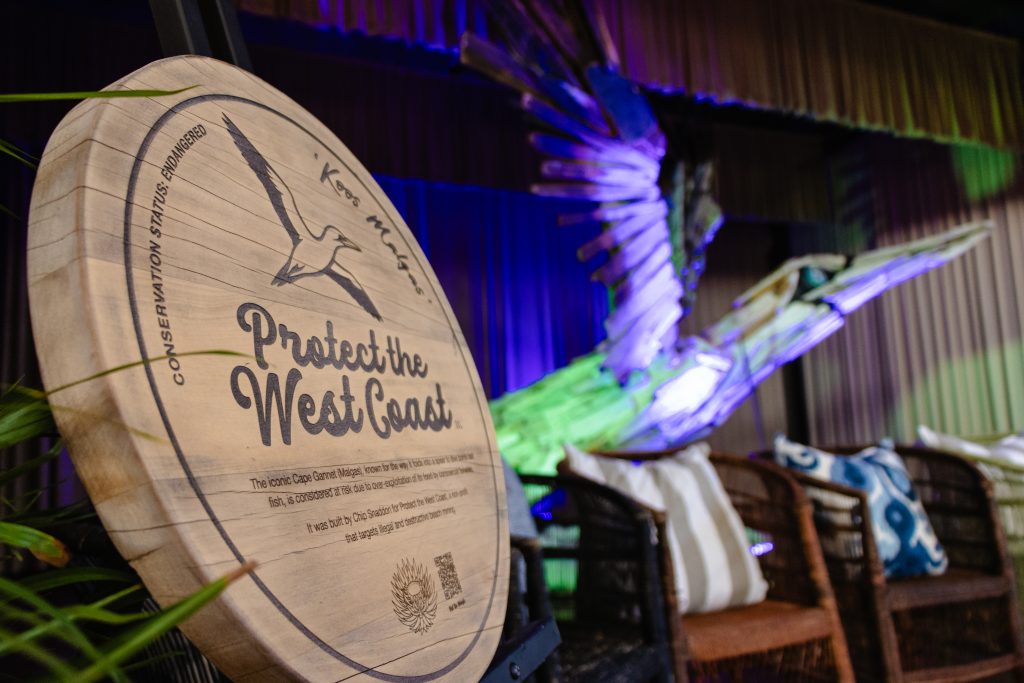
Indigenous leaders and West Coast stakeholders have urgently called on the government to prioritise sustainable development and environmental protection. The region is facing an unprecedented surge in beach and coastal mining applications for heavy minerals, rare earth elements and diamonds.
More than 150 community representatives from the region – including fishers, tribal leaders, scientists and politicians – attended the Ripple Effect Gathering in Langebaan on 14 March to brainstorm a sustainable economic future for the region, which must include input from indigenous communities.
The region is experiencing a deluge of mining and prospecting applications, with potentially damaging cumulative consequences for the community and environment. In 2026 alone, 48 new applications have been submitted for the Western and Northern Cape, while TransHex was recently granted an environmental authorisation for offshore diamond mining along the coast between Doringbaai and Strandfontein, just south of the Olifants River estuary.
Gaob Martinus Fredericks, representing the Nama people, said sustainable economic development such as ecotourism could bring positive long-term outcomes, but that the government needed to consult with indigenous communities going forward.
“Our people have lived here for thousands of years. We understand the value of our natural heritage and we want to safeguard our children’s livelihoods as well as our own,” he said.
South Africa’s West Coast – the coastline and connected inland area from Cape Town to the Northern Cape – is a fragile, biodiverse and culturally rich coastal region, sustaining more than 6 300 endemic plant and animal species. However, it is under immense pressure from the industrial-scale extraction of minerals that cumulatively threatens the entire region.
Delegates and attendees at the Ripple Effect Gathering, presented by Protect the West Coast (PTWC), said that while there were some responsible mining companies that rehabilitated and fulfilled their social & labour plans, the industry as a whole had failed to create promised jobs for communities.
Only 10% of the coast is currently protected, and the region is home to several endangered flora and fauna – for example, fewer than 800 adult black harriers remain in the wild. This is an endangered raptor and lead indicator species, currently recognised as Bird of the Year by BirdLife SA.
“The West Coast is at a tipping point. We risk losing birds, animals and ecosystems that cannot be restored. We urgently need to safeguard this unique heritage area for future generations while better providing for communities who live here. We aren’t against mining, but it must be done in a responsible way,” said Mike Schlebach, managing director of PTWC.
“People can only thrive in a healthy environment, and the West Coast has many options for sustainable development, including ecotourism, kelp farming and mining rehabilitation projects.”
The Ripple Effect Gathering opened with a traditional Khoisan blessing, watched over by the five-metre driftwood sculpture of a gannet, named Koos Malgas – another endangered bird species that serves as an apt metaphor for the fragility of the wild spaces of the West Coast and the urgent need to protect them.
In a series of talks and panel discussions opened by the Executive Mayor of Saldanha Bay, Alderman Marius Koen, conservation scientists, indigenous leaders, artisanal fishers and activists presented their concerns and ideas for what lies ahead.
“The government does not protect the fishers of the West Coast, but gives priority to development and mining without sufficient concern for our livelihoods. This is unfair and unconstitutional,” said Deborah de Wee of the Spirit of Endeavour Fisherfolk Women. “Fishing is a cultural right of the indigenous people of South Africa. We should be treated as custodians of the ocean, and not just people needed for their vote.”
In his talk, Schlebach said PTWC research showed the region was under severe mining pressure, with nearly the entire coastline from Elands Bay to the Orange River mouth under active mining or prospecting rights. Inland, 1 800 square kilometres of the Northern Cape have been earmarked for diamond mining, with up to 2 900km2 in the Western Cape reserved for prospecting.
He noted that mines could go bankrupt without completing rehabilitation, which meant land is left degraded when mining ends. Currently, the equivalent of 5 000 football fields of land in one area alone – near Hondeklipbaai – has been left unrehabilitated, following decades of mining, according to “The Tipping Point”, a special report on the effects of mining in the region recently published by PTWC.
“Mining and prospecting rights have been granted to individual applicants without sufficiently considering cumulative impact. However, by taking a more strategic approach, the impact of mining and other developments can be properly assessed. The goal is to create long-term jobs and sustainable development to protect environmental and cultural resources,” added Schlebach.
Alderman Koen conceded that the current approach was not meeting community needs for jobs and livelihoods. “As a municipality, we are investing in ecotourism and other sustainable development initiatives, but we can’t do this alone. We are calling on the national government to hold mining companies to account and to support sustainable development for the West Coast,” he said.
University of Cape Town restoration botanist Dr Peter Carrick, the preeminent expert in restoring the succulent Karoo after mining, emphasised that while even damaged land can be returned to its former state, it is more effective to provide the right framework for rehabilitation before mining begins.
“This is a uniquely beautiful landscape which is also incredibly fragile, but it is approaching a tipping point. We need to be careful about what type of development occurs and how that development takes place,” he said.
Sign the petition
Help keep up the momentum by signing and sharing the Ripple Effect petition calling for a moratorium on new mining applications until a more strategic approach to managing the West Coast’s natural resources is put in place.
Image credit: Jacque Smit