When hard work meets opportunity: How one young South African woman discovered a career in technology
7 min read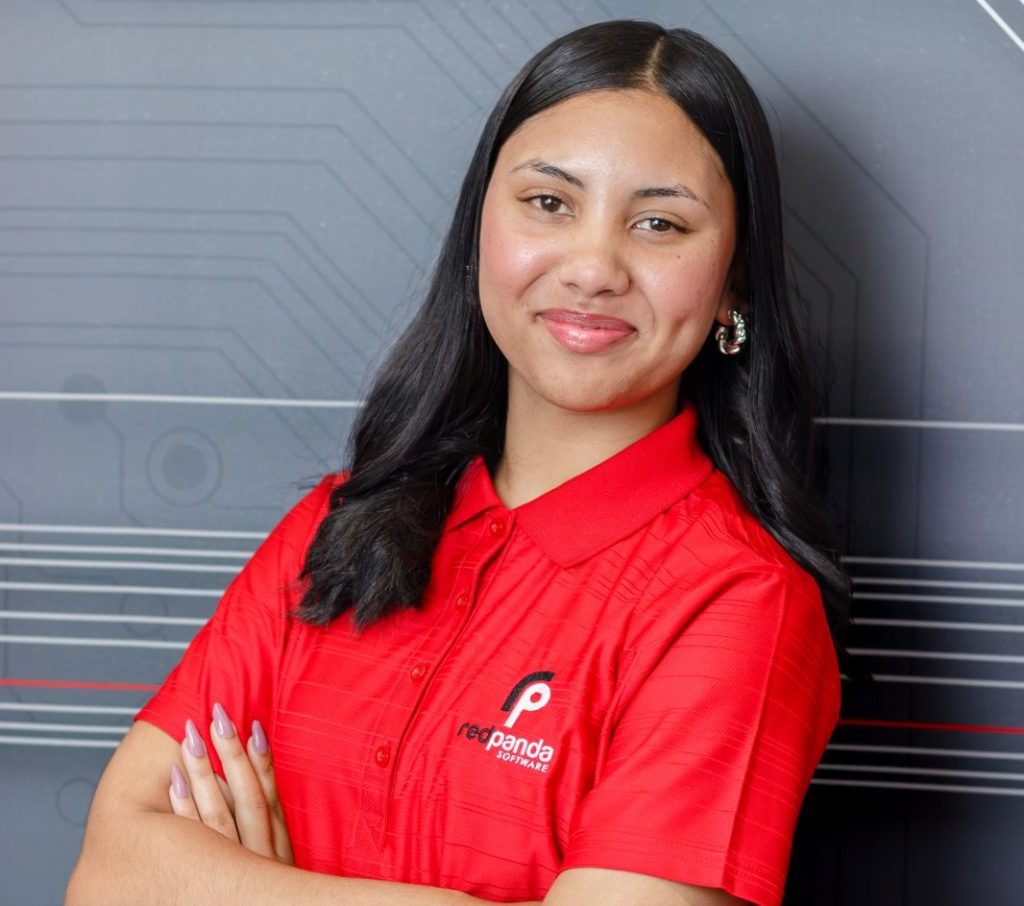
For many young South Africans, the leap from Matric to a career in technology can be difficult without formal qualifications or prior experience. redAcademy was established to help bridge this gap by providing a pathway into the sector through structured training, mentorship and practical, work-integrated learning.
By working on real development projects and engaging with industry mentors, students gain technical skills and workplace experience needed to begin building careers in technology.
At 21, Jamie Lee Martin is already working in a skilled role in the technology sector. Two years ago, this reality would have felt out of reach.
“I had no plan,” she says. “I spent months at home after Matric, trying to figure out what to do with my life.”
Like many young South Africans, she found herself in an uncertain space between education and employment. With limited career guidance and access to continued education, her path was unclear.
Today, Martin is a quality assurance professional in software development at redPanda Software, helping test products before release. Her journey from a matriculant with no clear career prospects to a successful technology professional was unexpected and remarkable.
Not only is Martin the first person in her family to complete Matric and pursue further learning, but she had not yet discovered how well her analytical thinking and attention to detail aligned with a career in technology.
“Looking back, I realise the way I approach problems and pay attention to detail is exactly what the tech environment requires,” she says.
The turning point came when Martin’s mother brought home information about a training opportunity focused on software development. What caught her attention was one simple detail: Applicants do not need prior IT experience. This is also what made Martin stop and consider taking a chance on something completely outside her knowledge. She applied, despite the fact that she’d never worked with computers before and had no technical background.
“I told them in the interview that I had no idea what coding was, but that I was willing to learn,” says Martin. “The entire experience was putting me miles outside my comfort zone.”
Martin was, of course, accepted into the programme, but she found the first few weeks overwhelming. Many of the other learners already had exposure to technology or programming – and Martin, the youngest in the group, felt lost immediately.
“I remember sitting there while everyone else was setting things up on their computers, and thinking that I wasn’t going to last a month,” she relates. “This was perhaps the hardest lesson I had to learn: asking for help. I was shy and uncomfortable asking for help, but this was a very collaborative environment where progress relied on teamwork, and I quickly realised that I had to connect, ask and learn.”
Despite the fact that she hated asking questions because she didn’t want people to know she didn’t understand a concept or a process, Martin forced herself to change her mindset and asked her classmates and mentors for guidance. This was, she believes, one of the most important turning points in her personal and professional development.
“You learn to rely on other people and collaborate more effectively,” she says. “You also learn accountability. When I encountered problems, I was expected to solve them independently before escalating them. It was a perfect balance between mentorship and responsibility that really helped me to build confidence.”
One of Martin’s most difficult moments came a few months into her studies when she was assigned an individual technical project. The goal was to demonstrate everything she’d learnt during the training period; instead, it became a trial of persistence. She spent weeks struggling with the project, often late into the night. During the December holidays, while others celebrated, she kept working.
“I kept thinking, did I really go through six months to just give up now?” she recalls. “Eventually, with guidance from my mentor and time to finish the work, I completed the project. It was an important lesson: You either work for the life you want or you let it pass you by.”
One aspect of the training provided by redAcademy which Martin believes made a significant difference was the opportunity to work on real projects rather than theoretical-only exercises. The second half of the programme had learners working in teams on software development tasks based on real client requirements. They participated in meetings, analysed project documentation and delivered work within structured sprint cycles similar to those used in the industry.
That exposure helped bridge the gap between learning technical concepts and understanding how they apply in real environments. “You start to see why things matter,” says Martin. “The projects forced us to develop skills beyond coding such as communication, accountability and problem solving.”
Today, Martin is a different person. She participates in meetings, contributes to discussions with colleagues and stakeholders, and recently found herself advising a new group of trainees on potential testing scenarios.
“That was a full circle moment,” says Jessica Hawkey, managing director at redAcademy. “Jamie was inspiring and supporting others who are now where she once was.”
Says Martin, “Two years ago, I would never have imagined a career in technology. It just goes to show, you can spend years waiting until you feel ready, or you can start now and learn along the way.”
She hopes to continue building her career in software development and eventually move into more senior roles. The opportunity has already allowed her to begin building financial independence and greater stability for herself.
Though her journey has only just begun, Jamie’s story proves that the right combination of grit, skill and opportunity can turn uncertainty into a life completely transformed.
What started as a leap into the unknown has become a pathway to independence, confidence and real impact – showing that when determination meets meaningful opportunity, it’s possible not just to build a career but to reshape the future.